
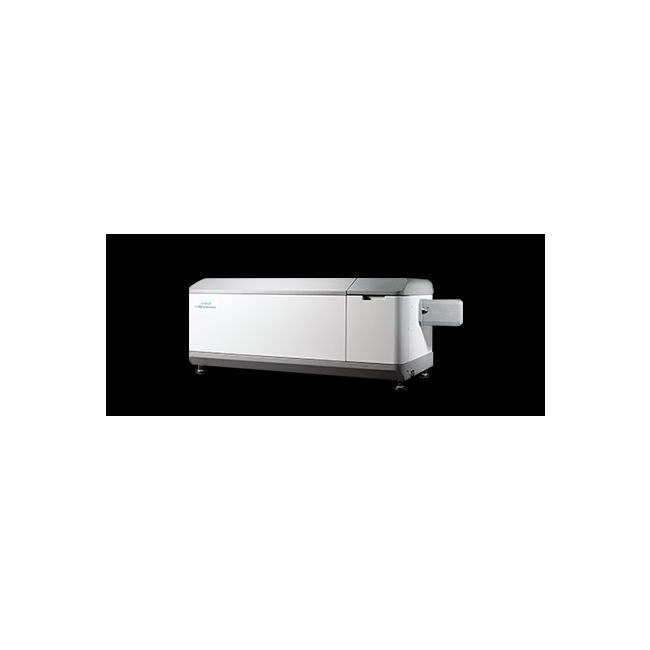
J-1500 Circular Dichroism Spectrophotometer
£0.00
The J-1500 Circular Dichroism Spectrophotometer allows for maximum flexibility to upgrade your CD system with different measurement techniques. While the standard measurement modes are CD, LD, and absorbance, up to four simultaneous modes can be measured when combined with a wide range of sampling accessories.
Availability:
In stock
SKU
J-1500
System Description
The J-1500 Circular Dichroism Spectrophotometer allows for maximum flexibility to upgrade your CD system with different measurement techniques. While the standard measurement modes are CD, LD, and absorbance, up to four simultaneous modes can be measured when combined with a wide range of sampling accessories.
These accessories can measure a variety of samples, from liquids to films to solid states. Temperature control systems can be coupled with multi-position cells to run thermal melts, providing researchers with CD and thermodynamic data sets for conformational and folding studies. Automated high-throughput CD can obtain measurements on up to 192 samples without user intervention, saving both time and money. Kinetic and protein dynamics studies can be performed with our dedicated stopped-flow systems that can measure both CD and fluorescence.
The wavelength range has also been significantly extended, allowing measurements to be obtained in both the vacuum-UV and NIR spectral regions using the standard PMT detector (163 – 950 nm) and an optional InGaAs detector (up to 1600 nm). Additional features now allow researchers to optimise their parameter specifications to obtain data with the highest resolution and S/N performance for a specific application set.
Advanced Features
- High optical throughput
- Double prism monochromator providing low stray light
- Wide dynamic range PMT detector
- Highly efficient nitrogen purge system
- Digital signal processing
- Simultaneous Multi-Probe: CD, LD, HT, DC, absorbance, fluorescence
- Photomultiplier detector assuring the best Signal-to-Noise in the market (0.004 mdeg at 185nm).
- Wide wavelength range – 163 to 950 nm (up to 1600 nm as option).
- Exceptionally low stray light, less than 0.0003% (at 200 nm).
- Continuous Scan, Step Scan, and Auto-Scan are available on the same instrument. Working in Continuous Scan, unlike a system working only in Step Scan, allows fast analysis in case the operating conditions or method are not optimized.
Unique Benefits and Accessories
- Compact benchtop design
- Range of precise temperature control accessories
- High-throughput automated CD
- Automated titration and stopped-flow
- Spectra Manager™ software for control and extensive data analysis
- Flexible design allows field upgrades for different measurement capabilities as applications and budgets evolve
Enhanced vacuum-UV measurement
The innovative optical system of the J-1500 permits the measurement of a CD spectrum in the vacuum-UV region down to 163 nm. The enhanced light throughput and new digital lock-in technology now allow for a small signal in a very noisy environment to be detected. Additionally, the optimisation of the nitrogen purge efficiency helps to reduce the amount of oxygen in the optical bench so that it does not bury the sample signal.
These features ensure that CD spectra can be obtained from strongly absorbing and high signal-to-noise (S/N) samples across the spectrum and into the vacuum-UV region. The quality of spectral data obtained, including data obtained at shorter wavelengths, substantially improves the accuracy of protein secondary structure analysis.
High Sensitivity and Wide Dynamic Range of PMT Detector
The PMT detectors used in the JASCO system are specially selected for the highest sensitivity and lowest birefringence. The wide dynamic range of the PMT detector ensures that large variations in signal intensity can still be detected, even for highly absorbing samples. The result is superior linearity between concentration and absorbance compared to other types of detectors including solid-state APD and CCD detectors.
The gain on a PMT detector is much larger (107) than most detectors, and therefore, the signal amplification is larger. Under conditions with adequate light intensity, this typically leads to a larger amount of noise and therefore a lower S/N ratio. However, under conditions where there is a small amount of light hitting the detector (i.e. far-UV region), the gain of the PMT allows for good signal amplification at very low noise, increasing the S/N ratio.
Exceptional stray-light rejection
The double polarizing prism monochromators of the J-1000 series result in stray light lower than 0.0003%, enabling the instruments to obtain high-quality CD data even under conditions with high absorbances.
Simultaneous Multi-Probe Measurements
The latest quad-channel lock-in amplifier provides simultaneous acquisition of up to four data channels, including CD, HT, DC, absorbance, linear dichroism (LD), fluorescence, fluorescence-detected CD (FDCD), fluorescence-detected LD (FDLD) and fluorescence anisotropy.
Additionally, the lock-in amplifier obtains a signal at a specific resonance frequency while filtering out noise signals at other frequencies, helping to provide spectra with excellent signal-to-noise ratios.
Rapid Scanning
High sensitivity combined with a 10,000 nm-per-minute maximum scan speed allows the J-1500 to measure samples quickly, increasing productivity in your lab. An additional benefit is the minimal time exposure of biological samples to the high-energy UV light, minimizing the risk of sample degradation. A mechanical shutter can also be programmed to open and close only during actual measurement to further avoid UV exposure.
Highest S/N Performance
The high S/N (signal-to-noise) performance of the J-1000 series is achieved by a high-throughput optical system and low-noise signal processing. RMS Noise < 0.004 mdeg (185 nm) for the J-1500 and J-1700, < 0.03 mdeg (200 nm) for J-1100.